BOLUSIL ® and pressure therapy
Silicone sheets for hypertrophic and keloid scars.
How it works
After surgery, an injury or a burn, a scar can become hypertrophic or form contractures, due to excessive collagen production. When it persists beyond 18 months, it is called a keloid.
The standard preventive or curative treatment is pressure therapy combined with a silicone sheet. Compression flattens and softens the scar. Silicone is occlusive: it keeps the skin hydrated and reduces itching.
The sheet is applied once epithelialisation is complete, for as long as the scar remains inflammatory. It can also be used on scars that are already hypertrophic or keloid.
Use
Based on published protocols and our own trials, we recommend wearing it at least 12 hours a day, mainly at night. Treatment usually lasts 6 to 12 months.
- The sheet must cover the whole scar.
- Wash it every day.
- Replace it as soon as it shows wear.
How it is held in place depends on the area: cohesive bandage, tubular net or thermoplastic for circular areas; microporous tape elsewhere, possibly with a pressure garment if the area is large or mobile.
Available formats
| Product | Formats |
|---|---|
| BOLUSIL ® | 0.5 mm film; 1, 3, 5 and 10 mm sheets |
| BOLUFORMABLE ® | 1, 3 and 5 mm sheets, bonded to a thermoplastic sheet |
Bonding the silicone sheet to an orthosis
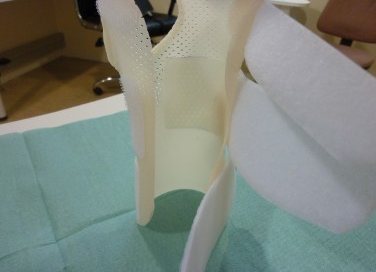
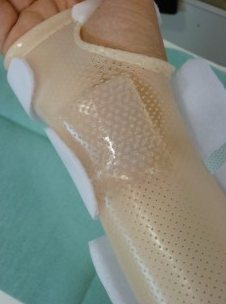
BOLUFORMABLE ® combines a BOLUSIL ® sheet with a thermoplastic sheet. It bonds directly to the orthosis, with no glue. Example on a wrist orthosis:
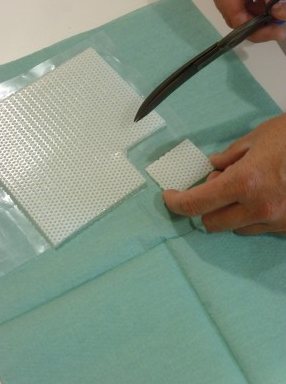
Cut
Cut the BOLUFORMABLE ® sheet with scissors to cover the whole scar.
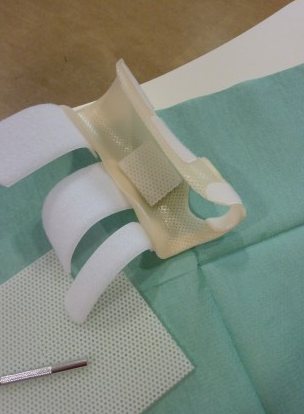
Position
Find the exact place of the piece on the orthosis.
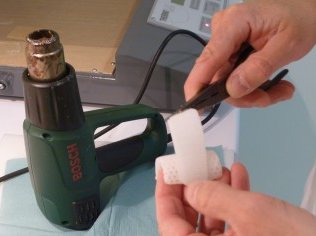
Heat the BOLUFORMABLE ®
Heat the piece for a few minutes with a hot air gun, at 60 to 100 °C, until the BOLUSIL ® layer becomes transparent.
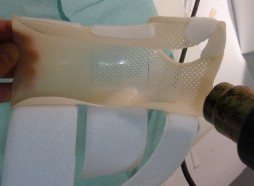
Heat the orthosis
Soften the orthosis at the relevant point, for maximum compression and a precise fit to the patient's anatomy.
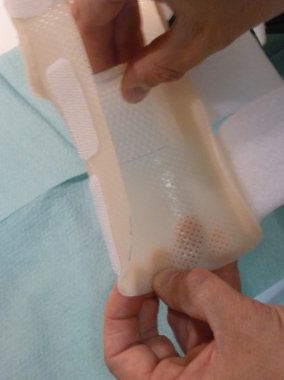
Assemble
Press the piece onto the orthosis by hand: the two softened parts bond together.
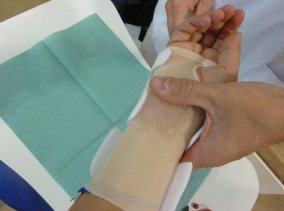
Fit on the patient
Put the orthosis in place, here on the wrist, to fit the anatomy closely. A bandage can add compression.
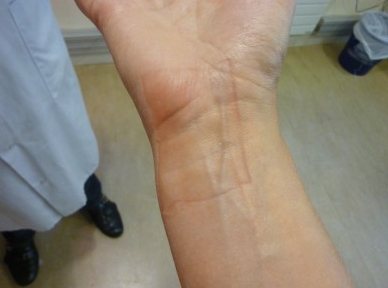
Results
For healthcare professionals
Our silicone sheets are designed for orthotists and occupational therapists who make custom orthoses, physiotherapists, burn centres and plastic and reconstructive surgery departments.
They are made in our premises in Aubergenville, France, in standard sizes or cut to measure. We send samples so you can try the product before ordering.
Request samples Request a quote
If the button does not open your email app, write to contact@kerjean-biotechnologies.com or call +33 6 85 92 81 61.
Frequently asked questions
How long should a silicone sheet be worn on a scar?
We recommend at least 12 hours a day, mainly at night. Treatment usually lasts 6 to 12 months; the exact duration is set by the healthcare professional following the patient.
When should silicone pressure therapy start?
Once epithelialisation is complete, and for as long as the scar remains inflammatory. The sheet can also be used on scars that are already hypertrophic or keloid.
How should the sheet be cared for?
Wash it every day and replace it as soon as it shows wear. It must always cover the whole scar.
Can it be used with a pressure garment or an orthosis?
Yes. On large or mobile areas, the sheet is worn under a pressure garment. BOLUFORMABLE ® bonds directly to a thermoplastic orthosis, with no glue.
How is the sheet held in place?
On circular areas (arm, finger, wrist), use a cohesive bandage, a tubular net or a thermoplastic. Elsewhere, microporous tape is usually enough.
Can the sheet be cut?
Yes, it is easy to cut with scissors to fit the shape of the scar. Custom sizes are also available on quote.
They should be used under the supervision of a healthcare professional.